
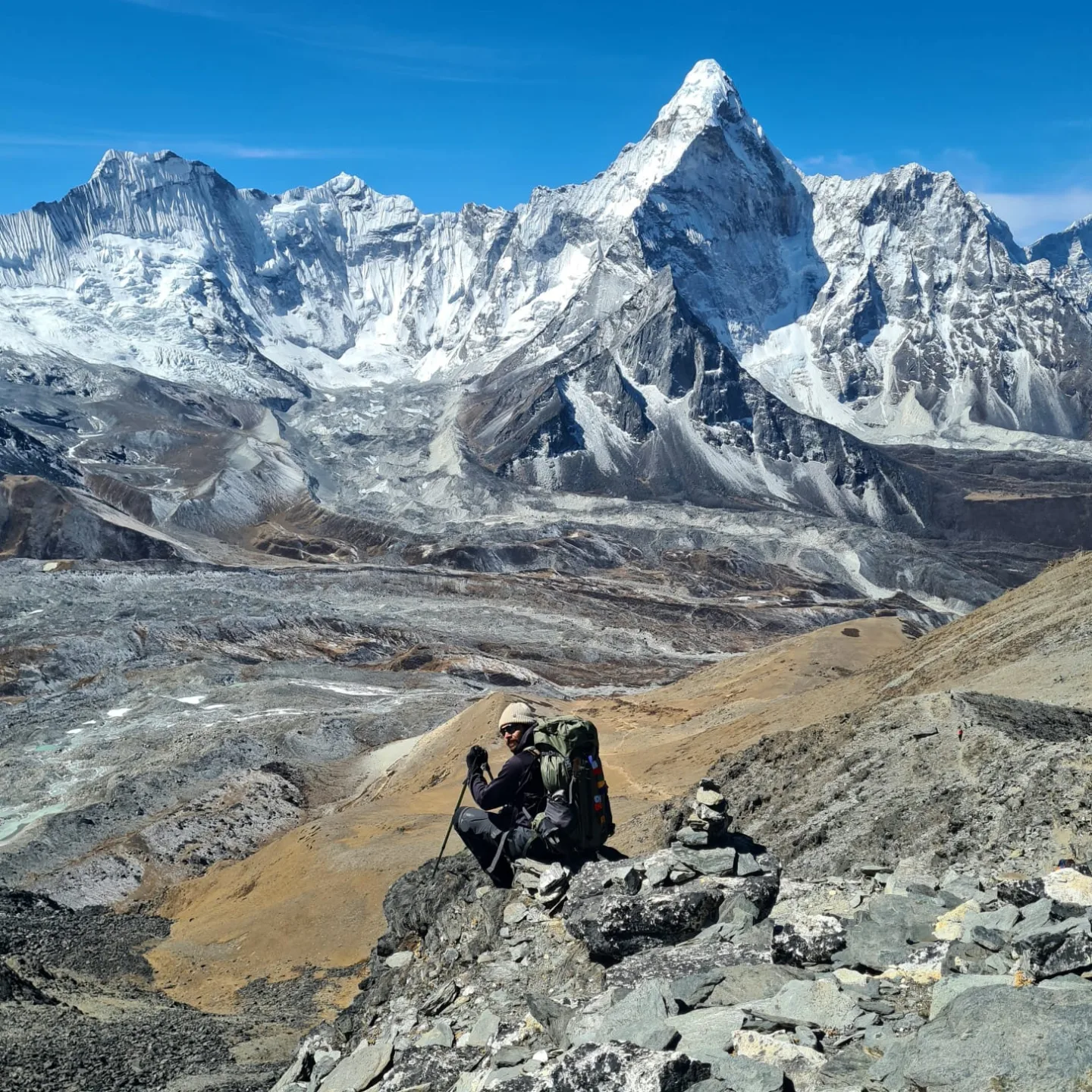
1. The Wild East: Lower Kanchenjunga Region
Why it’s off-the-beaten-path: Far from the flight hubs of Lukla and Pokhara, this remote region sees only a fraction of the trekkers that the more famous routes get. It’s a demanding but profoundly rewarding journey.
- What to Expect: Trekking around the world’s third-highest mountain, Kanchenjunga. You’ll experience a stunning transition from subtropical jungles (home to red pandas and snow leopards) to the towering icy peaks of Kanchenjunga and Jannu. The culture is a blend of Limbu, Rai, and Tibetan communities.
- Highlights: The panoramic views from the north and south base camps, the ancient monasteries of Oktang and Lhonak, and the sense of true wilderness.
- Logistics: Requires a special permit and a registered guide. This is a long, challenging trek (18-24 days), so excellent physical fitness is required.
2. The Forbidden Kingdom: Upper Mustang
Why it’s off-the-beaten-path: This arid desert kingdom was closed to foreigners until 1992 and still requires a special, expensive permit, which keeps visitor numbers low. It feels like a different country altogether.
- What to Expect: A landscape reminiscent of the Tibetan Plateau, with dramatic cliffs, deep canyons, and unique rock formations. The culture is purely Tibetan, with ancient, colorful monasteries and cave dwellings dating back centuries.
- Highlights: Exploring the walled city of Lo Manthang, the king’s palace, the sky caves of Chhoser (some containing 2,000-year-old human remains), and the Tiji Festival in spring.
- Logistics: Accessible by a short flight or trek from Jomsom. The special permit costs are required by the government agencies. Best visited from March to early November.
3. The Sacred Hidden Lake: Rara Lake (Rara National Park)
Why it’s off-the-beaten-path: Located in the remote far-western region, Rara is Nepal’s largest lake but one of its least-visited national parks. The journey there is an adventure in itself.
- What to Expect: A pristine, crystal-clear blue lake surrounded by pine, spruce, and juniper forests, with the snow-capped Himalayas as a backdrop. The area is serene and almost untouched by mass tourism.
- Highlights: Boating on the tranquil lake, spotting rare wildlife like the red panda and musk deer, and hiking to viewpoints for breathtaking panoramas. The silence and solitude are unparalleled.
- Logistics: Reached via a short flight from Nepalgunj to Talcha Airport, followed by a trek. Alternatively, a long but scenic multi-day trek from Jumla.
4. The Eastern Himalayan Gem: Makalu Barun National Park
Why it’s off-the-beaten-path: Nestled between the Everest and Kanchenjunga regions, this park is one of the most biodiverse places on Earth but receives very few visitors due to its challenging terrain.
- What to Expect: Trekking in the shadow of the world’s fifth-highest mountain, Makalu. The trail takes you from steamy lowlands with tropical forests to the high-altitude arctic zone of Makalu Base Camp. It’s a botanist’s and bird-watcher’s paradise.
- Highlights: The stunning view of Makalu from Shershong, the remote Barun Valley (a Himalayan “Shangri-La”), and the chance to be almost completely alone in a world-class mountain setting.
- Logistics: A very strenuous trek. Requires excellent fitness and proper acclimatization. Access is typically via a flight to Tumlingtar.
5. The Cultural Crossroads: Tsum Valley
Why it’s off-the-beaten-path: Tucked away north of the Manaslu Circuit, the sacred Tsum Valley was closed to tourists until 2008. It remains a hidden sanctuary of ancient Tibetan Buddhism.
- What to Expect: A culturally rich journey through a valley dotted with ancient stupas, mani walls, and secluded monasteries. The people, Tsumbas, have a unique culture and practice non-violence, so you’ll see many more free-roaming livestock.
- Highlights: Visiting the Milarepa’s Cave, the Rachen Gompa and Mu Gompa monasteries, and experiencing the profound peace and spirituality of the valley.
- Logistics: Requires a special restricted area permit, usually combined with the Manaslu Circuit Trek. The trek is of moderate difficulty.
6. The Western Wilds: Dolpo Region
Why it’s off-the-beaten-path: Immortalized in the film Himalaya (Caravan), Dolpo is Nepal’s largest and most remote district. Its extreme isolation and high cost make it the ultimate adventure.
- What to Expect: Vast, arid landscapes, turquoise lakes (like Phoksundo), and a truly nomadic culture. Upper Dolpo, in particular, is one of the highest inhabited places on Earth and feels like stepping back in time.
- Highlights: Shey Gompa (the “Crystal Monastery”), the stunning Phoksundo Lake (Nepal’s deepest), and witnessing the ancient Bon Po religion, which predates Buddhism.
- Logistics: Very expensive and logistically complex. Requires a long trek and flights on small aircraft. Special permits are mandatory for both Lower and Upper Dolpo.
Essential Tips for Your Offbeat Adventure:
- Guides and Permits: These areas are restricted for a reason—infrastructure is minimal, and navigation can be difficult. A registered guide is mandatory for most, and special permits are required. This also supports the local economy.
- Physical Fitness: These treks are generally more challenging and longer than the classic ones. Train accordingly.
- Embrace Flexibility: Weather, flight cancellations, and trail conditions can change plans. Go with the flow and enjoy the journey.
- Travel Responsibly: You are a guest in fragile ecosystems and ancient cultures. Pack out all trash, respect local customs, and be a conscious traveler.
Venturing to these hidden corners of Nepal is not just a trip; it’s a pilgrimage into the heart of the Himalayas. You’ll return with stories far beyond the ordinary.